Fire doors - Ei rating explained.
Fire doors are a crucial component of fire safety in buildings, as they help to contain and prevent the spread of fire. There are various types of fire doors, and they can be classified based on fire resistance time, typically measured in minutes.
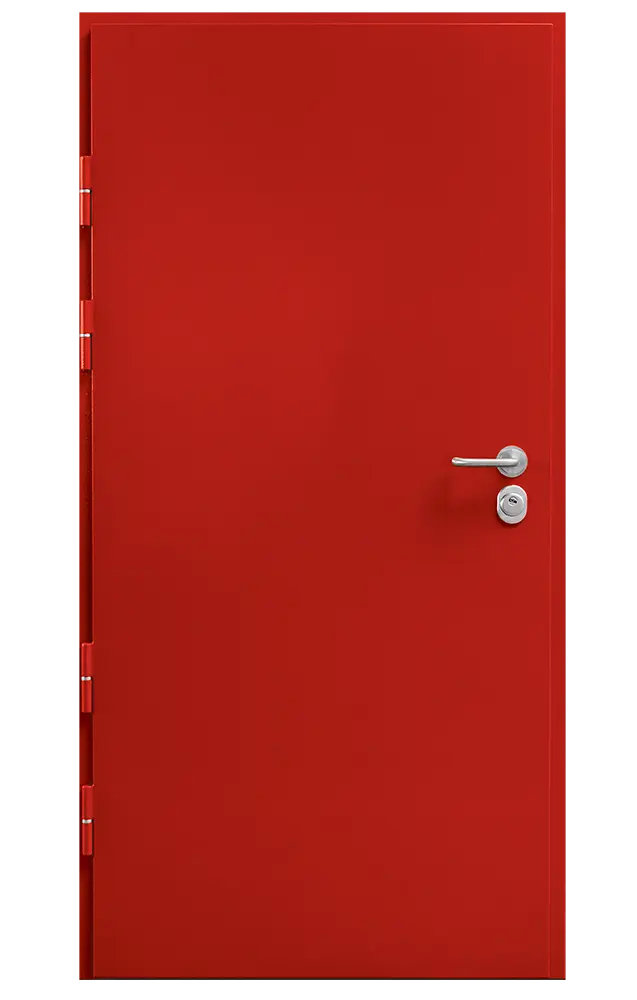
View Our Fire Rated Security Doors
Explore our range of fire rated security doors with EI30s-EI60s fire resistance and RC3-RC4 security ratings.
How are fire-rated doors classified?
The classification system uses a timetable, where each plate number denotes a different fire resistance time. The timetable includes 15, 30, 45, 60, 90, 120, and 180/240 minutes.
What types of fire doors are available?
Wooden Fire doors
Wooden fire doors are cost-effective and commonly used as internal fire doors, especially when security is not a priority.
These doors are made of fire-rated cores and finished with various veneers. They are designed to prevent the spread of fire and smoke.
Fire doors made of steel
Steel fire doors are highly recommended for buildings where safety and security are top priorities. These doors are designed to withstand high temperatures and prevent the spread of fire, providing a safe escape route for building occupants. Steel fire doors are particularly beneficial in building areas with a high risk of fire, such as kitchens, boiler rooms, and electrical rooms.
Additionally, they are commonly used in commercial and industrial settings where high levels of security are required, such as banks, data centres, and government buildings. With their durable construction and resistant properties, steel fire doors are a reliable choice for any building that prioritises safety and security.
Fire-rated glazing systems
Fire-rated glazing systems are commonly used in public spaces and high-end modern homes. This particular system creates fire protection, allowing a lot of light to pass from outside the building inside and from one room to another.
Fire-rated glazing systems typically consist of solid, non-operational glazed panels and fire-rated doors with glass from top to bottom, creating glass walls.
Characteristics and purpose of fire doors.
Fire doors are made of non-flammable materials, fire-rated hardware, and special intumescent strips installed on the door leaf and frame. The intumescent strips are designed to expand when exposed to high temperatures, effectively sealing off the area and preventing the spread of flames.
Typically, each of the fire-rated doors would have an automatic closer to make sure that the fire door is closed in the event of fire.
In some situations, a fire door might be held open by a magnet that is linked to the fire alarm system. When the alarm is triggered, the magnet releases the door, which is then closed automatically by a closer. This helps to create a fire barrier and prevent the spread of fire.
Each fire door must have a plate with manufacturer and service dates, which must be regularly carried out to prevent failure during a fire.
Can you replace the glass in a fire door?
Glass is an integral component of a door and should only be replaced by a qualified professional.
The replacement glass and intumescent strips must comply with fire and manufacturer guidelines to preserve door integrity.
It is advisable to contact the company that installed the door. The contact details are usually available on the door plate.
Building regulations and fire rated doors
Building regulations vary significantly from country to country and sometimes even within regions or states of a country.
The regulations are established by local authorities or national governing bodies to ensure that buildings meet particular safety, health, and environmental standards.
Fire safety is a crucial aspect of building regulations, and the requirements for fire-rated doors are often specified to enhance overall fire protection within structures.
The specific regulations governing fire-rated doors can include criteria such as:
- Fire Resistance Ratings: Regulations may specify the required fire resistance rating for doors in different parts of a building. This rating is typically expressed in minutes (e.g., 30 minutes, 60 minutes) and indicates the duration for which the door must withstand fire.
- Testing and Certification: Fire-rated doors are often required to undergo testing by recognised laboratories to ensure they meet the specified fire resistance standards. Certification from these tests is crucial for compliance with regulations.
- Installation Requirements: Building codes may outline specific guidelines for the installation of fire-rated doors, including proper framing, hardware, and the use of approved seals to maintain the integrity of the fire barrier.
- Location and Application: Regulations may dictate where fire-rated doors are required within a building, such as in stairwells, corridors, or between different occupancy areas. The type of building and its designated use can influence the specific requirements.
- Maintenance and Inspections: Some regulations may include provisions for regular inspections and maintenance of fire-rated doors to ensure they remain in proper working condition.
Given the variability in building regulations, it is crucial for architects, builders, and property owners to consult and comply with the local building codes and fire safety standards applicable to their specific jurisdiction.
This helps ensure that fire-rated doors and other safety features are not only in compliance with regulations but also optimised for the unique characteristics of the local environment and building usage.
Regular updates to building codes and regulations may also impact the requirements for fire-rated doors, underlining the importance of staying informed and adapting to evolving standards.
Important Note:
Understanding fire door ratings and requirements is essential for ensuring proper fire safety in your building.
Explore Our Fire Rated Security Doors
Discover our range of fire rated security doors with EI30s-EI60s fire resistance ratings and comprehensive protection.