Bringing Light In
Internal glazing & the dark home
The most impactful single design decision in a dark home is almost always about glass.
The Problem
Light enters from
one end.
Darkness lives
in the other.
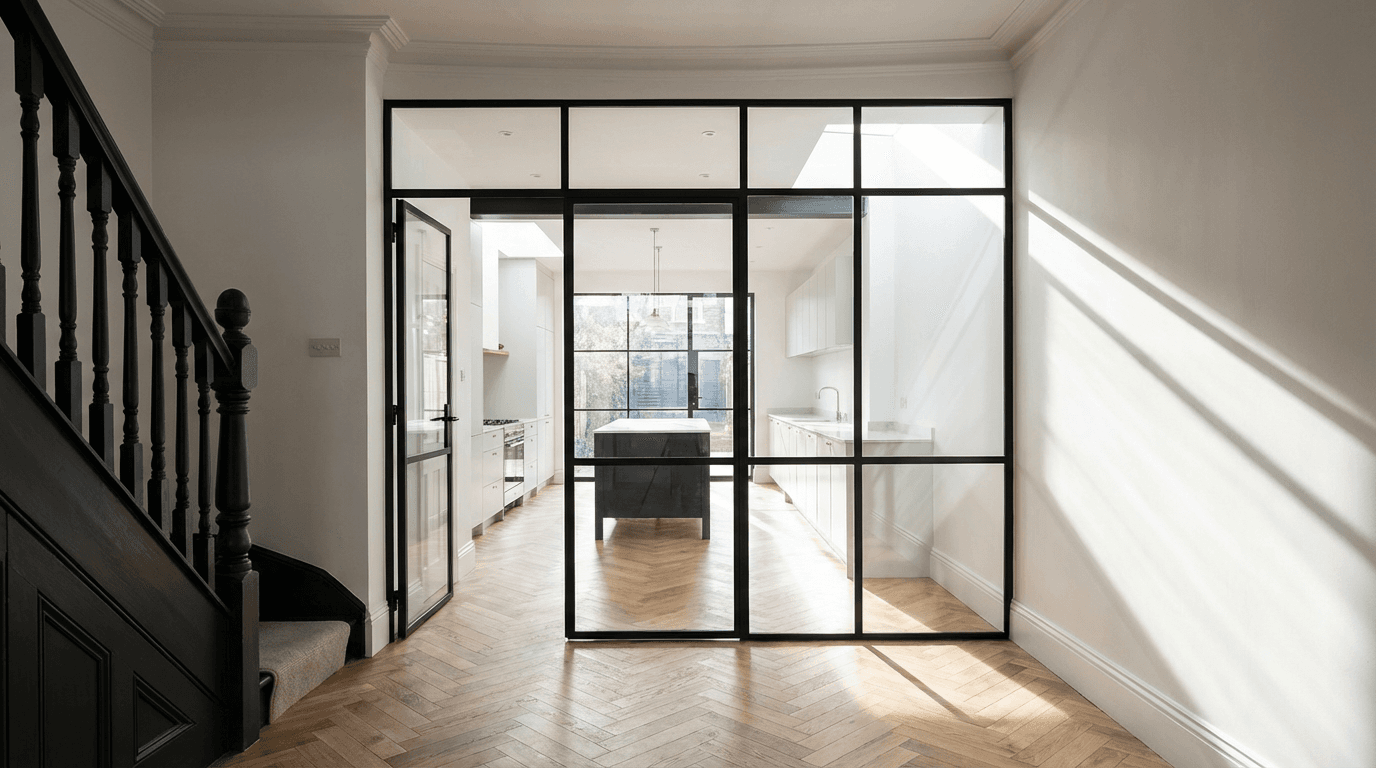
Victorian and Edwardian terraces — which make up a significant proportion of the Irish and British housing stock — share a structural characteristic that determines everything about how they feel to live in: they are narrow and deep, with natural light entering almost exclusively from the front and rear.
Modern rear extensions, now almost universal in period terraces, solve the light problem at the back of the house. But they can inadvertently make the rest worse — the extension draws all the light to one end, and the transition into the original building becomes a hard threshold between bright and dark.
A steel frame glass partition at that threshold is the most effective single intervention available. It does not require structural work. It does not require planning permission. It changes the quality of every room it connects.
Light as material
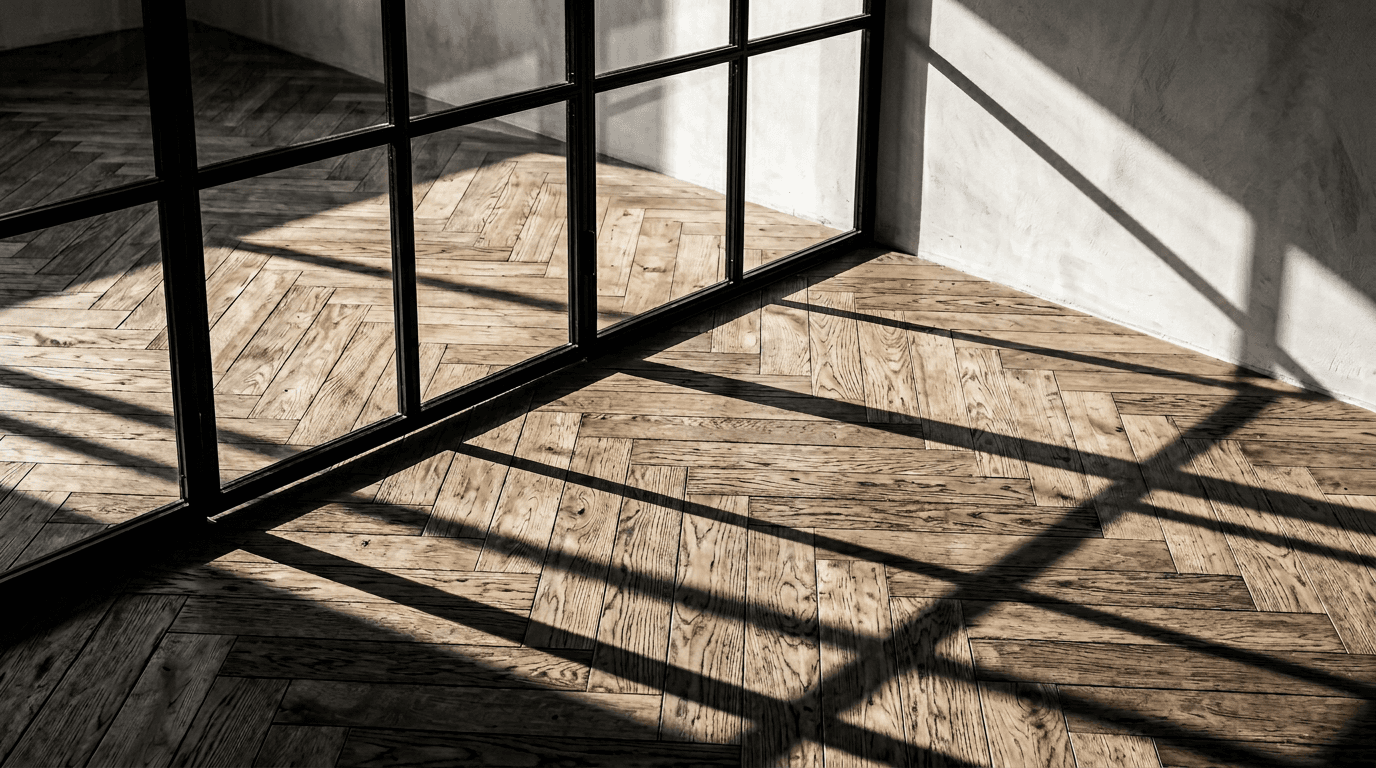
The steel frame becomes a light instrument
Where Internal Glazing Makes the Greatest Difference
Extension to Old House
The threshold between a rear extension and the original Victorian footprint. Replacing a solid wall or door with a glazed partition moves rear daylight forward through the entire ground floor plan.
Hallway to Living Room
A glazed partition with a door between the entrance hall and principal reception room. The hallway — typically the darkest space in the house — receives borrowed light from the room beyond.
Stairwell Glazing
Fixed glazed panels at the stairwell allow light from upper floors to reach ground level. In a terrace with a rear dormer or skylight, the stairwell becomes a light well for the entire house.
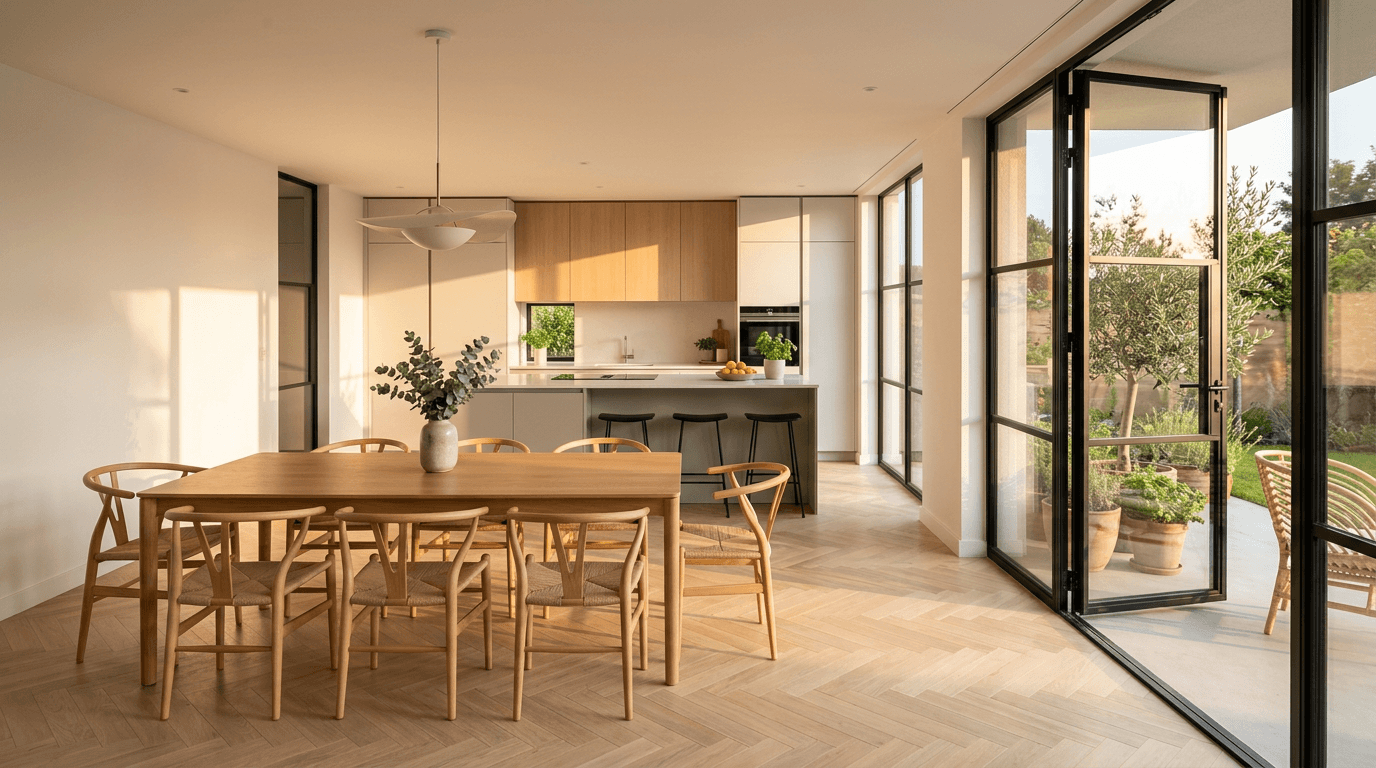
"The frame itself becomes part of the light — its shadow a graphic element that moves through the day."
TDS Design Notes
Glass Selection
Light quality
is a glass decision
Clear Float Glass
Maximum transmissionThe highest light transmission. Every lumen from the bright room reaches the dark room. The frame is fully visible — the graphic quality of the steel grid is part of the design. Best where visual connection and light maximisation are both priorities.
Low-Iron Glass
Truest colour renditionStandard float glass has a slight green tint from iron oxide content. Low-iron (ultra-clear) glass removes this, giving neutral white daylight transmission. Specified where colour accuracy matters — art spaces, photography studios, rooms with white or pale finishes.
Fluted / Reeded Glass
Light with privacyTransmits light while obscuring direct vision. The vertical flutes diffuse and scatter light in a way that is simultaneously functional and beautiful. For internal doors where some privacy is needed — utility areas, bathrooms, study doors — without blocking the light.
Satin / Frosted Glass
Soft diffused lightConverts direct light to soft, diffused illumination. The quality of light in the receiving space is softer and more even than with clear glass. Appropriate for bathrooms and bedrooms where privacy is needed and soft light is desirable.
Configuration for Maximum Glass Area
Door + Fixed Side Panels
The most effective configuration for moving light. A hinged door with fixed glazed panels to one or both sides fills the full wall opening with glass. When the door is closed, almost no light is blocked — the fixed panels transmit continuously. When the door is open, the threshold disappears.
View configuration →Double Door + Side Panels
For wide openings — a structural opening between two rooms rather than a standard doorway. Maximum glazed area. The light transmission is as close to an open archway as a closable partition can achieve.
View configuration →Single Door
For standard doorways. Replaces a solid door with full-height glazing. Even a single glazed leaf makes a significant difference — the visual and actual light transmission through a 2.1m glass door is many times that of a solid door with a small glass insert.
View configuration →Fixed Glazed Screen (No Door)
Where an opening is not required — only light transmission. A fixed glazed panel in a steel frame, set into a wall opening. Provides the full light benefit without the door mechanism. For visual connection between spaces without passage between them.
View configuration →TDS · Dublin
See the difference
at our Dublin showroom.
Every door is made to measure following a site survey. We can visit your home and advise on glazing configuration, glass specification, and the optimal partition position for maximum light.
FAQ
How do internal glass partitions bring light into a dark home?
Internal steel frame glass partitions replace solid walls or doors with glazed screens, allowing natural light to travel between rooms. In a Victorian terrace, a glazed partition between the rear kitchen extension and the front hallway or living room can transform the entire ground floor — light that was previously trapped in the extension now flows through the house. The slimline steel frame (20–25mm visible profile) maximises the glazed area, so the light transmission is as high as structurally possible.
What is the most effective way to bring light into a Victorian terrace?
The single most effective intervention in a Victorian terrace is a glazed partition or screen between the rear kitchen extension and the existing footprint. Victorian houses are typically narrow and deep — the front rooms are dark because all natural light enters from the rear. A steel frame glass partition with a door, replacing a solid wall between the old house and the new extension, channels rear daylight through the entire ground floor plan. The difference is dramatic.
Can internal glass partitions provide acoustic separation?
Yes. A glazed steel frame partition with a door provides significantly better acoustic performance than a timber door alone, particularly in a double-door or door-with-panel configuration. The glass specification affects performance — laminated glass provides better sound reduction than standard float glass. For home offices or study partitions where acoustic privacy is important, we can advise on glass specification during the design consultation.
Do internal glass partitions require planning permission in Ireland?
Internal partitions are generally classified as internal alterations and do not require planning permission in Ireland. However, if the partition forms part of a fire compartment — for example in a commercial building or where building regulations require fire-rated separation — the partition must be specified to the required EI fire rating. TDS can advise on the regulatory requirements for your specific project.