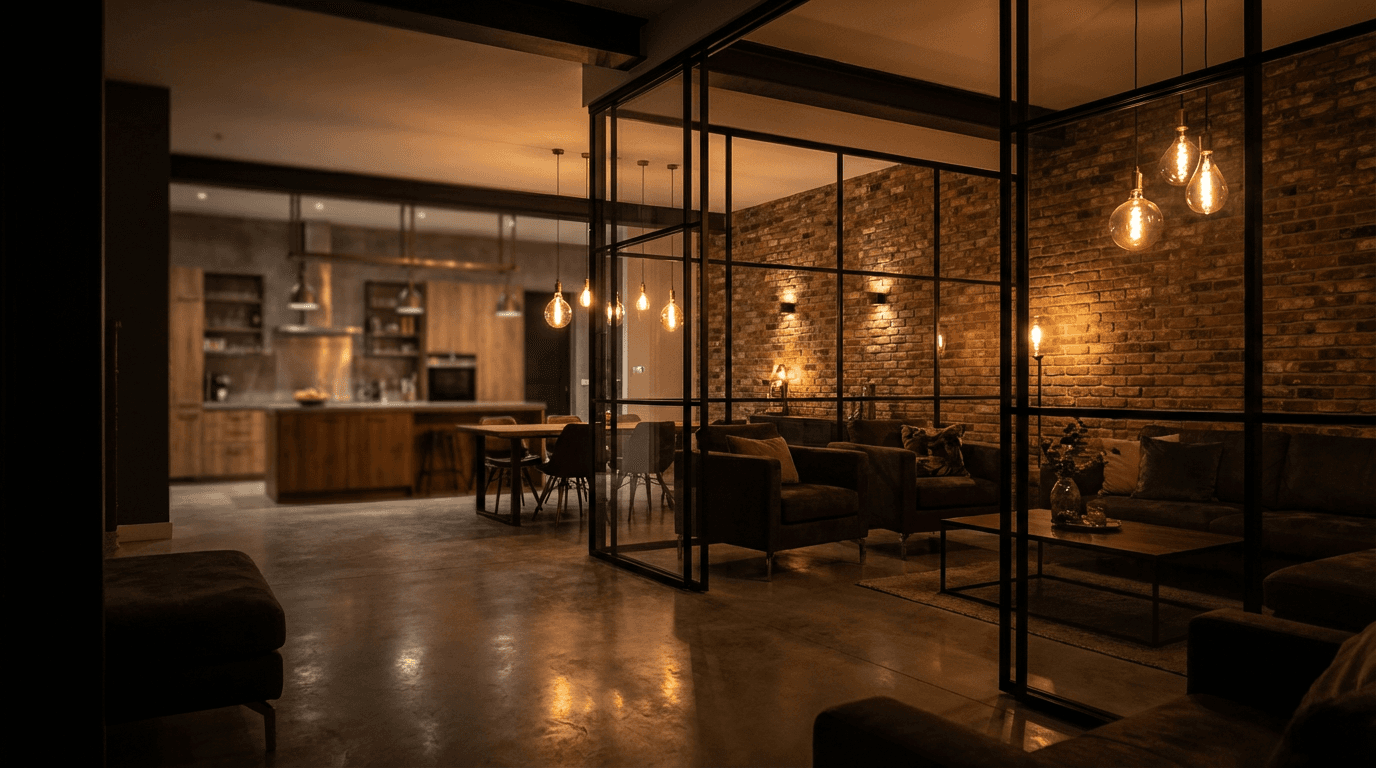
Industrial Style
The Role of Steel Frame Doors
At the centre of any authentic industrial interior is a material vocabulary that begins with steel.
The Aesthetic
Material honesty,
structural expression
Industrial interior design has moved well beyond its origins in converted warehouses and loft apartments. It is now one of the dominant residential and commercial interior aesthetics — specified in new builds, townhouses, commercial offices, and hospitality spaces.
The aesthetic emerged from the conversion of industrial buildings in cities like New York, London, and Chicago in the 1970s, where exposed structural elements — steel beams, brick walls, concrete floors, iron columns — were preserved rather than concealed. Contemporary industrial design distils these qualities into principles that can be applied to any space.
Why Steel Defines the Industrial Interior
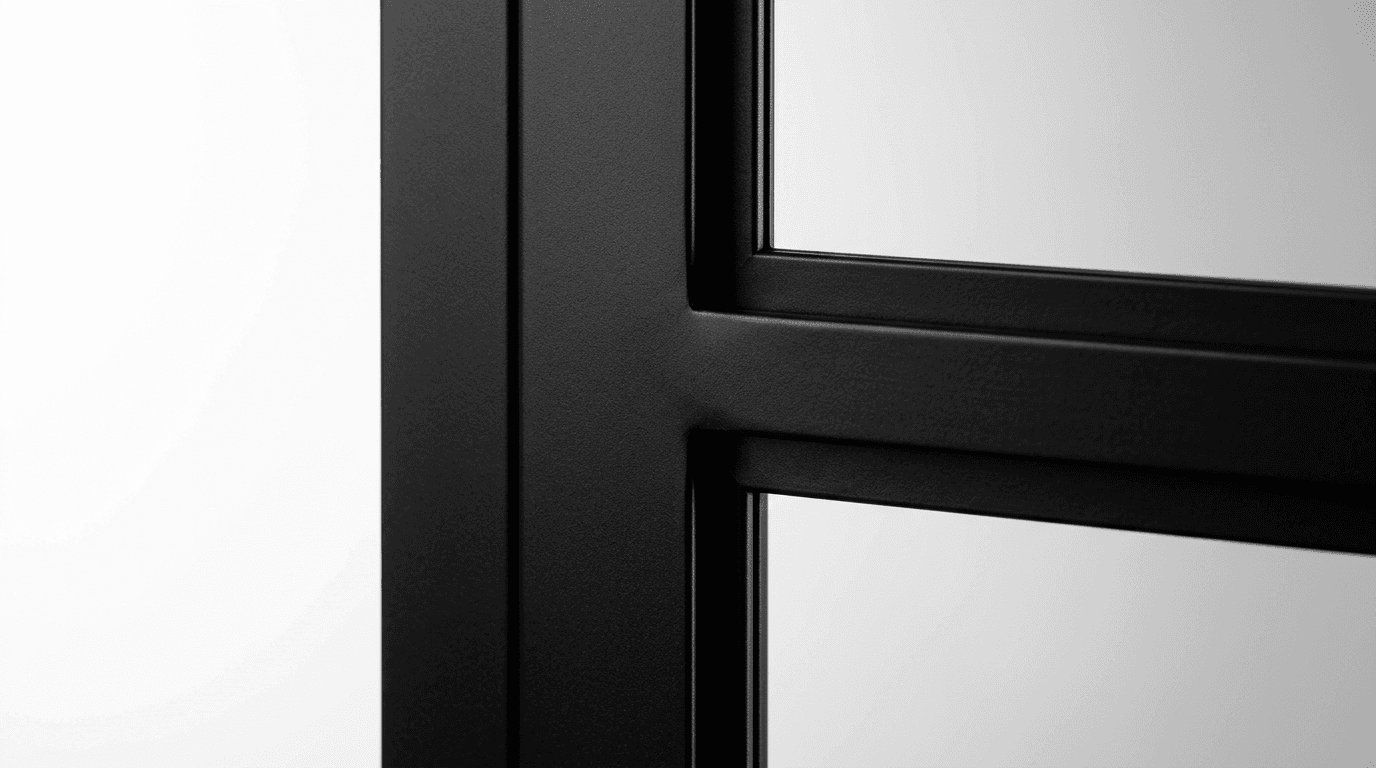
Slimline Profile
A 20–25mm visible frame reads as a structural section, not joinery. The glass appears to float within a minimal enclosure — the defining visual quality of the OC Slimline.
Welded Construction
Corners are welded, ground smooth, and finished continuously. No mechanical fasteners, no visible joints. The frame reads as a single manufactured element.
Dark Powder Coat
RAL 9005 Jet Black in a matt finish is the industrial default — included in our standard colour range. Deep greys (7016, 7021, 7024) recede similarly so the frame reads as a line and the glass becomes the wall.
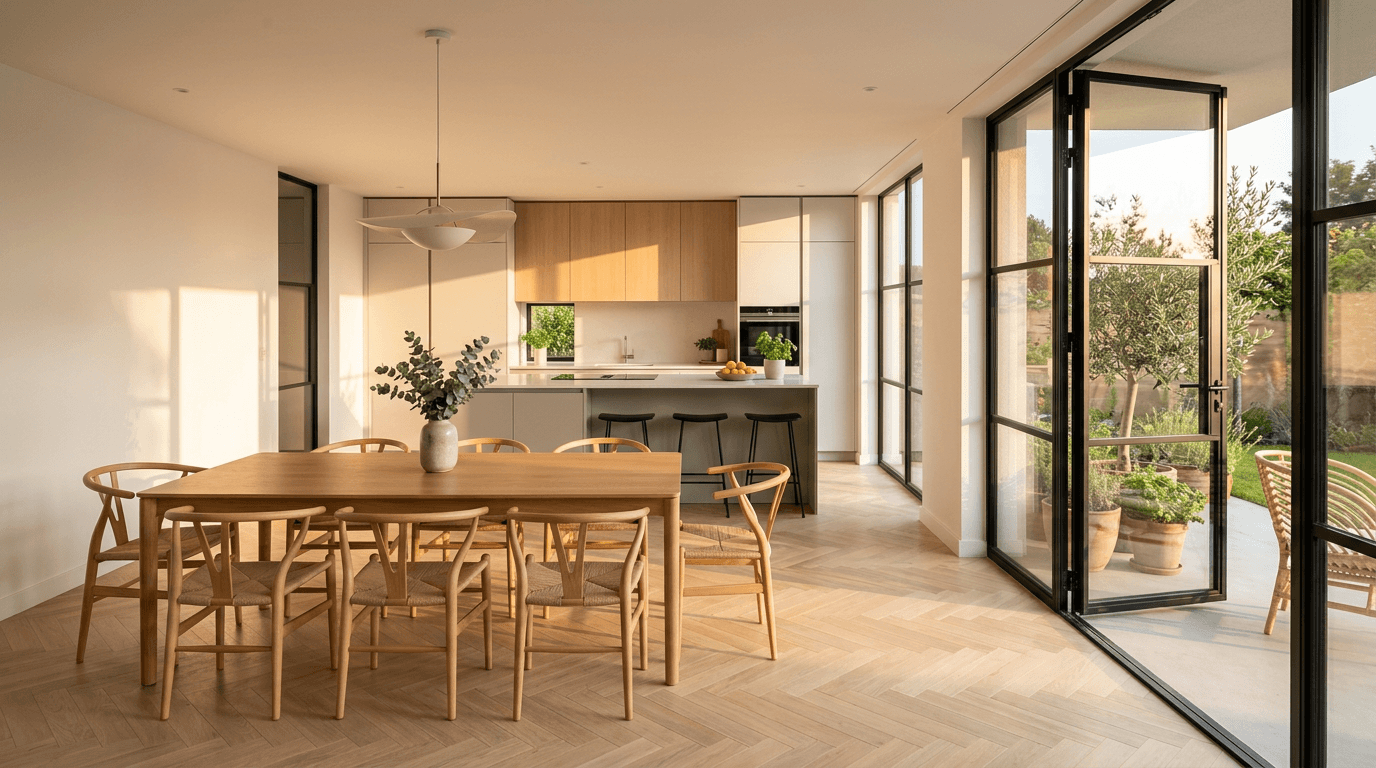
"A steel frame door is not an accessory to the industrial aesthetic — it is one of its primary expressions."
TDS Design Notes
Colour & Finish
The Industrial Palette
A selection of our most popular shades — included in the price of every door. These colours offer a timeless foundation for any space and are readily available in multiple finish options. For industrial interiors, specifiers still gravitate to deep neutrals — but Traffic White, Cream, and timber-toned browns from the same standard range are equally valid when you want warmth or Crittall-style contrast without leaving the catalogue palette.
Industrial favourites (all standard / included): RAL 9005 Jet Black, RAL 7016 Anthracite Grey, RAL 7021 Black Grey, RAL 7024 Graphite Grey, RAL 7039 Quartz Grey, RAL 7001 Silver Grey, RAL 7012 Basalt Grey — plus RAL 9016 Traffic White and RAL 9001 Cream for light-filled schemes.
Standard RAL colours (included in door price)
Premium & bespoke: For more individualised projects, we offer a broader palette of non-standard colours. These are priced individually and may include less common tones, deep pigments, or custom-matched requests.
The colours presented in our catalogue and on screen are for reference only and are not an exact match. Powder-coated finishes on steel frames may differ in appearance because of surface texture, coating process, and lighting. Finishes are based on the RAL and IGP colour systems — for an accurate assessment, use official RAL or IGP colour charts or physical samples of the actual powder-coated finish.
Matt powder coat remains the default for industrial applications; satin is available where a softer sheen is required. Full OC Slimline colour guide (standard vs premium).
Glass Selection
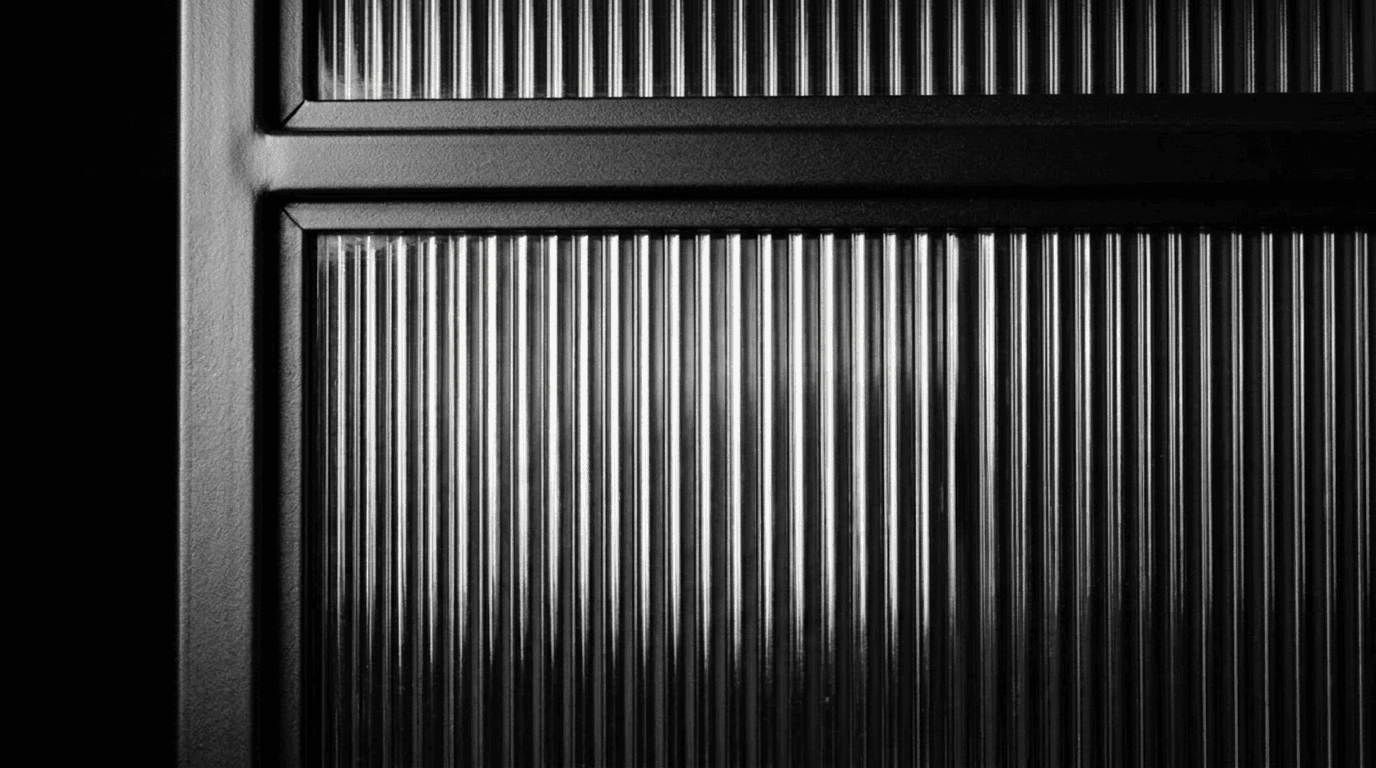
Fluted Glass.
The defining material of 2025–2026.
Vertical flutes refract and diffuse light in a way that is simultaneously decorative and functional. The reeded texture amplifies the industrial-art-deco crossover dominant in current residential design.
Glass Options
Clear Glass
Maximum visual connection. The steel frame reads clearly as a structural element. Standard for open-plan layouts.
Fluted / Reeded
Scatters light beautifully while obscuring direct vision. Increasingly specified in residential and hospitality. The dominant glass trend.
Satin / Frosted
Diffuses light without losing its quality. For privacy without darkness. Use textured satin — not flat frosted.
Glazing Bars
Georgian or Crittall-style division patterns welded into the frame. References the original factory window — the source of the industrial aesthetic.
Residential Applications
From loft
to townhouse
Kitchen / Living Partition
Double door or door-with-panels dividing open plan. Visual connection maintained, acoustic separation achieved.
Living Room to Hallway
Single door as room divider. Defines the entry sequence without closing the space.
Home Office Partition
Glazed partition with door. Visible from main living area — reads as design, not as a partition wall.
Bathroom Door
Fluted or satin glass in black steel. Dramatic in a monochromatic bathroom, without sacrificing privacy.
Stairwell Glazing
Fixed panels with door. Brings light from an upper storey into ground floor circulation.
Complementary Materials
The complete
palette
Floors
Polished concrete, large-format porcelain (charcoal/grey), original timber floorboards (dark-stained or aged)
Walls
Exposed brick, raw or sealed concrete, dark plaster (microcement, Venetian plaster in grey/charcoal)
Ceilings
Exposed soffits, visible structural steel, dark-painted rafters, industrial track lighting
Textiles
Leather, wool, linen, aged timber — warmth through texture, not colour
Lighting
Exposed filament bulbs, cage pendant lights, enamel shades, track systems
OC Slimline
20mm welded profile · RAL 9005 matt
TDS · Dublin
Every door made
to your exact opening.
We work with interior designers, architects, and direct clients. Site survey, glass selection, RAL finish, hardware coordination — all included.
FAQ
What makes a door look industrial?
The industrial aesthetic in doors comes from three things: material honesty (steel that looks like steel), slimline profiling (20–25mm visible frames), and dark finish (RAL 9005 Jet Black or RAL 7016 Anthracite Grey). A door with a welded steel frame, full-height clear or fluted glazing, and a matt black powder coat finish is the defining element of contemporary industrial interior design.
What colour is best for steel doors in an industrial interior?
RAL 9005 Jet Black (matt) is the most specified colour for industrial-style steel doors — it reads as structural and honest. RAL 7016 Anthracite Grey, RAL 7021 Black Grey, and RAL 7024 Graphite Grey are also popular from the standard range (included in the door price). RAL 9016 Traffic White and RAL 9001 Cream suit Crittall-style light schemes without a premium surcharge. Any other RAL or bespoke match is available as premium.
What type of glass is used in industrial style doors?
Clear glass is the default for industrial interiors. Fluted (reeded) glass is increasingly popular — it scatters light beautifully while obscuring direct vision, amplifying the industrial-art-deco crossover dominant in current residential design.
Can industrial style doors work in residential homes?
Industrial style is now firmly established in residential design, particularly in converted properties, open-plan living spaces, and contemporary new builds. TDS makes every door to the exact opening, so the proportions are always correct.