Glass & steel
Options that shape the room
The glass specification is as important as the frame. Here is how to think about it for OC Slimline internal doors.
Why it matters
Light, privacy, and the character of the space
Steel frame internal doors are as much about the glass as the metal. Clear glass maximises connection between rooms; textured and frosted options give privacy without losing the sense of openness. In Irish homes, where daylight is precious, the right glazing makes a measurable difference to how a house feels day to day.
TDS manufactures each door to your opening, so glass type, thickness, and any acoustic or safety layers are chosen with your project — not picked from a limited shelf range.
Common choices
Clear glass
Maximum light and visual flow. The steel grid reads clearly — ideal for living spaces, hallways, and open-plan divisions where you want the rooms to feel connected.
Frosted / satin
Diffused light and obscured detail. Well suited to bathrooms, studies, and utility areas where you need separation without a solid wall.
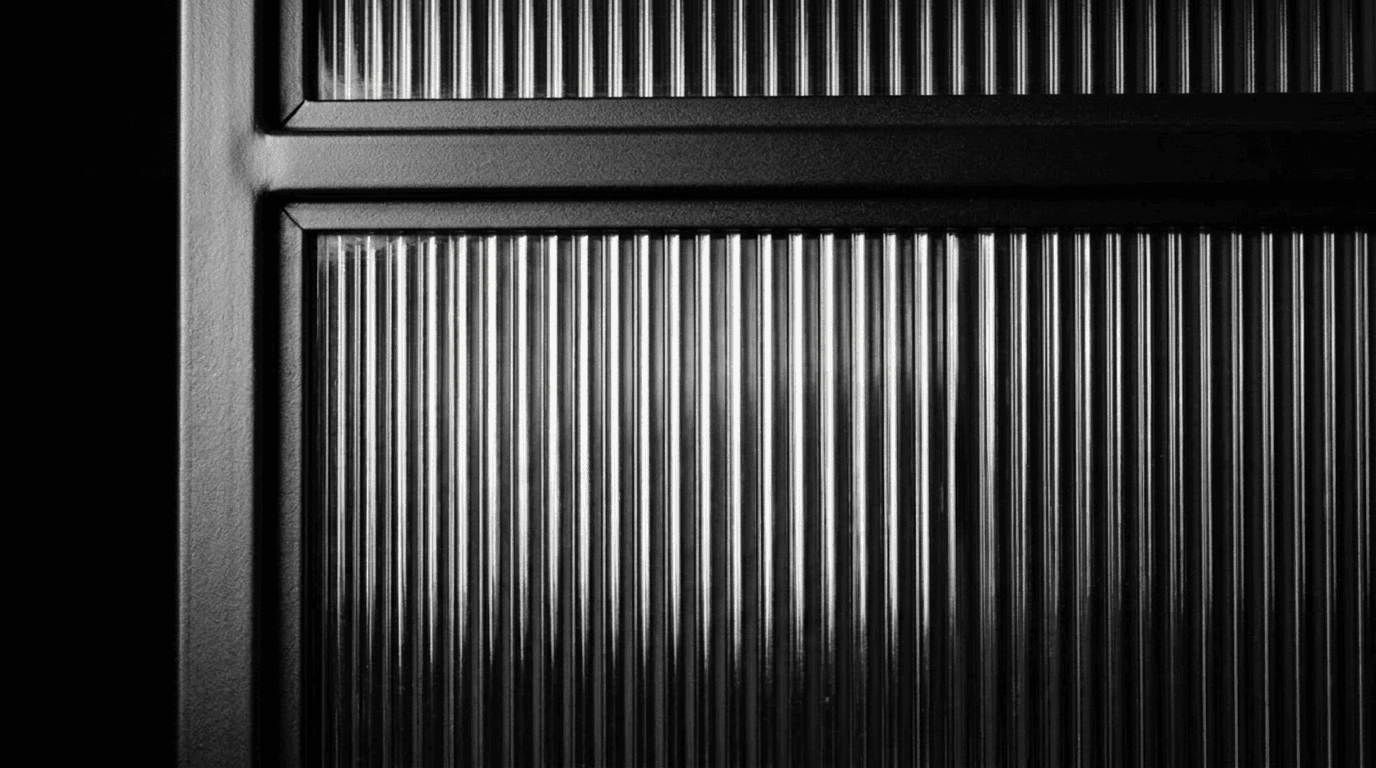
Fluted (reeded)
Strong directional texture and privacy with a decorative, art-deco inflection. One of the most requested finishes for contemporary residential projects.
Tinted & specialist
For specific aesthetics or performance (acoustics, safety laminates), we can advise during specification and site survey.
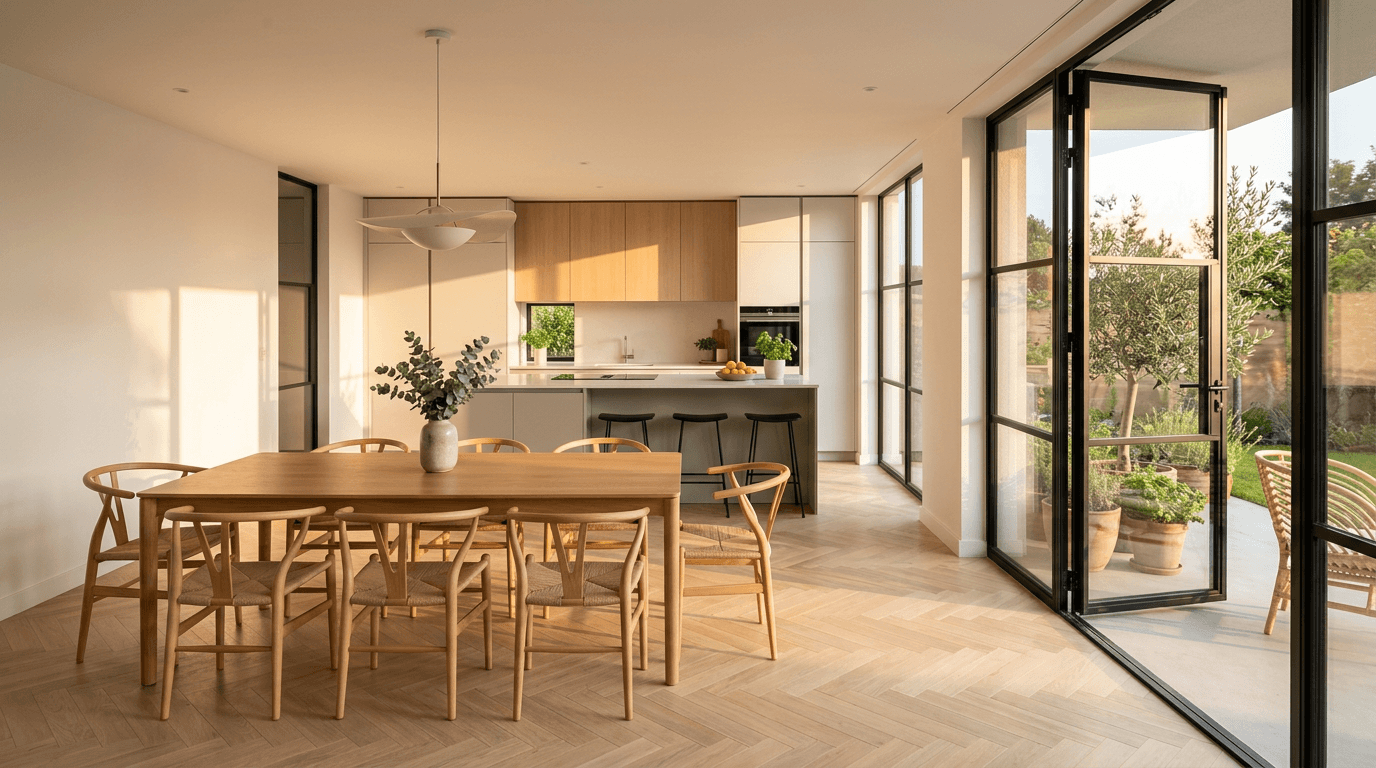
The frame stays slim; the glass does the emotional work — brightness, rhythm, and calm.
Sliding and hinged configurations
Sliding doors can free floor space in tighter plans; hinged doors often feel more traditional and formal. Both can use the same glass palette — the choice is about circulation and how you use the rooms on either side.
For a deeper dive on moving light through a plan, see Bringing Light In and for industrial-era aesthetics and fluted glass in context, Industrial Style Guide.
TDS · OC Slimline