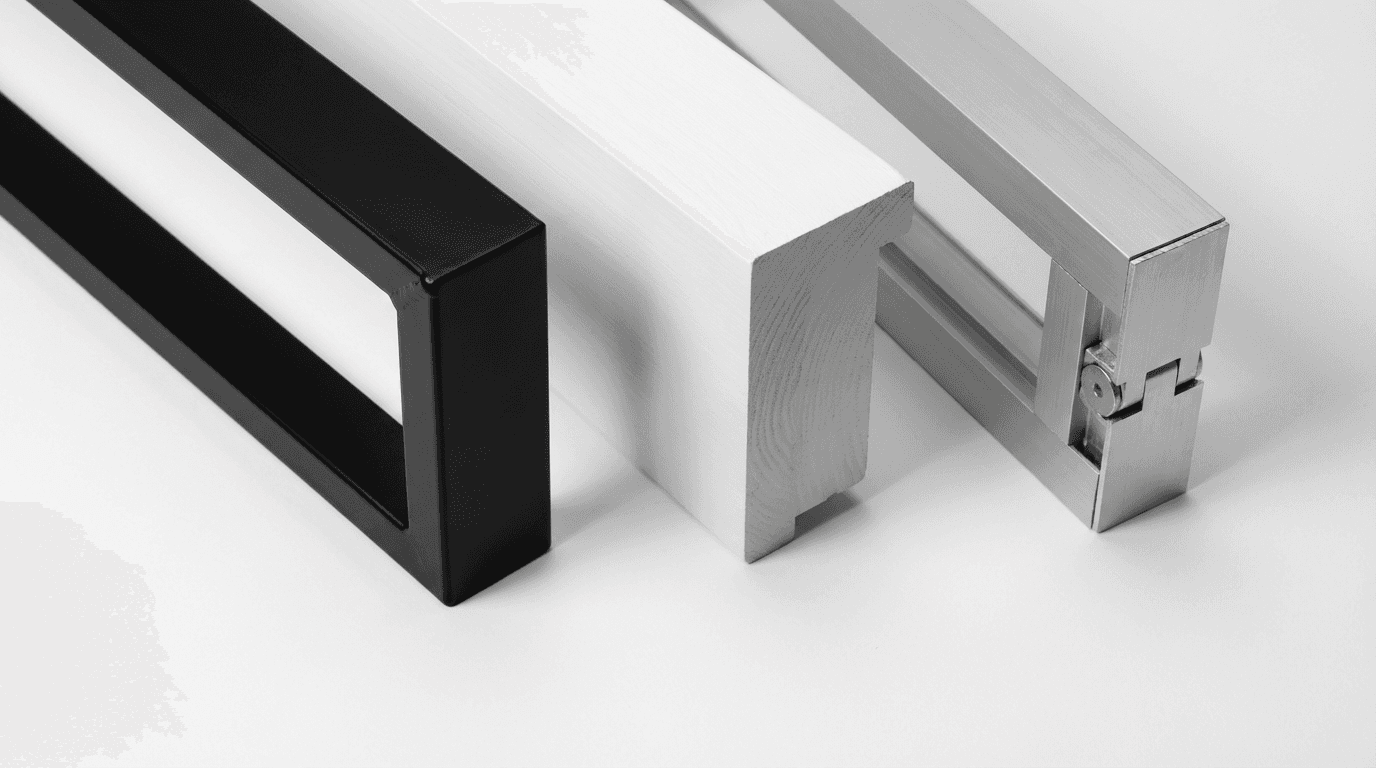
Steel · Timber · Aluminium
What is the actual difference?
Three materials. Three product categories. Not variations of the same thing.
The Question
Why frame width
is the only number
that matters
When a client asks about "internal glass doors," they may be looking at three entirely different product categories. Off-the-shelf timber with glass inserts. Aluminium framing systems. Bespoke steel frame doors.
Steel has a tensile strength of approximately 400–500 MPa for standard structural grades. Aluminium sits at roughly 70–100 MPa — less than a quarter. The practical consequence is straightforward: to carry the same glass load, an aluminium frame must be significantly wider. TDS OC Slimline doors achieve a visible face of 20–25mm. A comparable aluminium system will typically show 45–70mm.
On a door, that difference in visible profile changes the entire character of the product — and the room.
Steel vs Aluminium — At a Glance
The corner joint is often the detail that reveals what you're looking at. Steel frames are welded, ground, and finished to a continuous surface — the corner disappears. The frame reads as a single unbroken element.
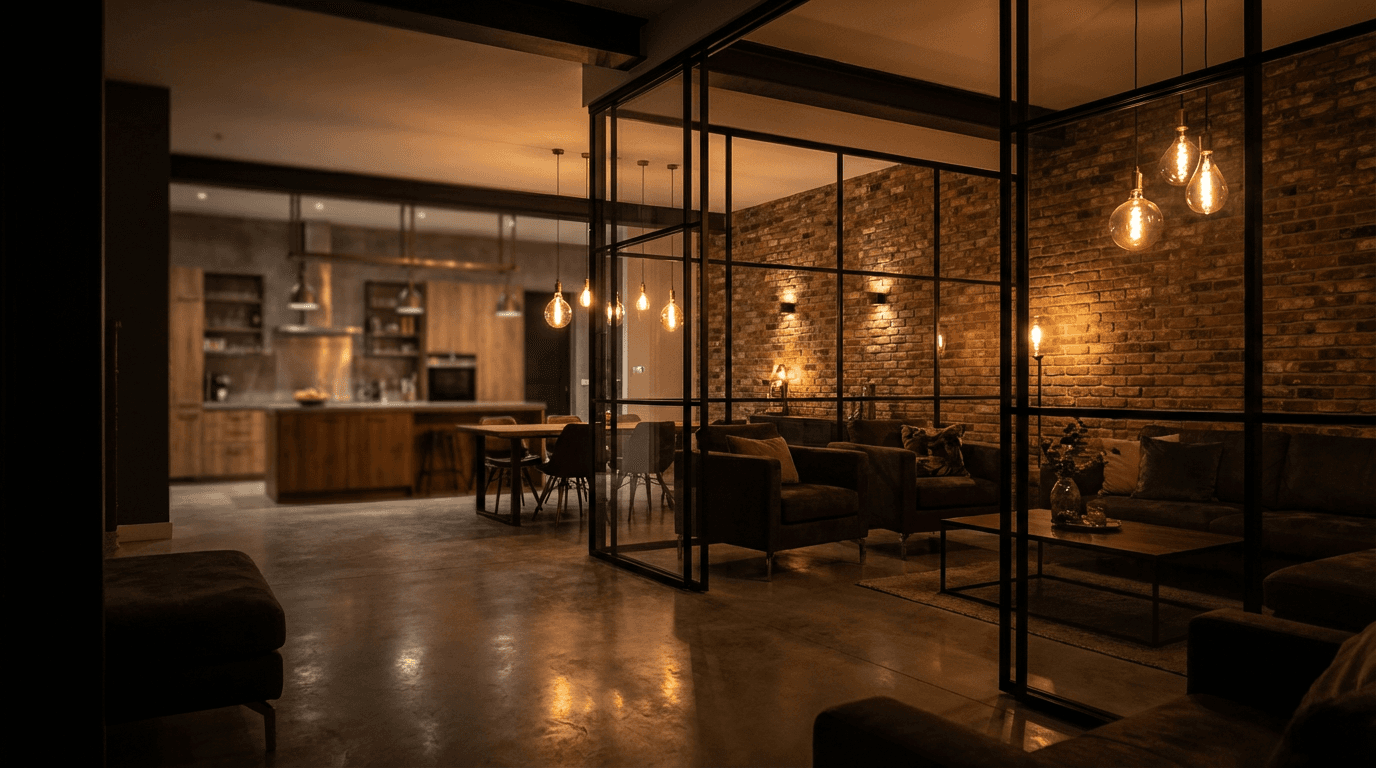
"A door that reads as a reused curtain wall component belongs to a different conversation."
TDS Design NotesSteel vs Timber
Where timber
is the right choice
- —Warm, tactile surface — traditional or rustic interiors
- —Lower cost for solid-panel doors with minimal glazing
- —Easier to source locally and adapt on-site
- —Wide finish options for traditional interior palettes
Where steel
outperforms
- —Maximum glazed area with minimal frame
- —Dimensionally stable — no warping, no seasonal movement
- —Welded construction — no loose joints over time
- —Large-format openings: double doors, floor-to-ceiling systems
- —Contemporary, industrial, and minimal architectural styles
- —Longevity — properly finished steel does not deteriorate
Available Configurations
Single Door
Single hinged leaf. The most common residential configuration.
View →
Single + Panel
Single leaf with fixed glazed panel. Maximum glass in a wide opening.
View →
Double Door
Two hinged leaves meeting at centre. Suited to large or formal openings.
View →
Double + Panels
Double leaf with fixed panels. The largest glazed area possible.
View →
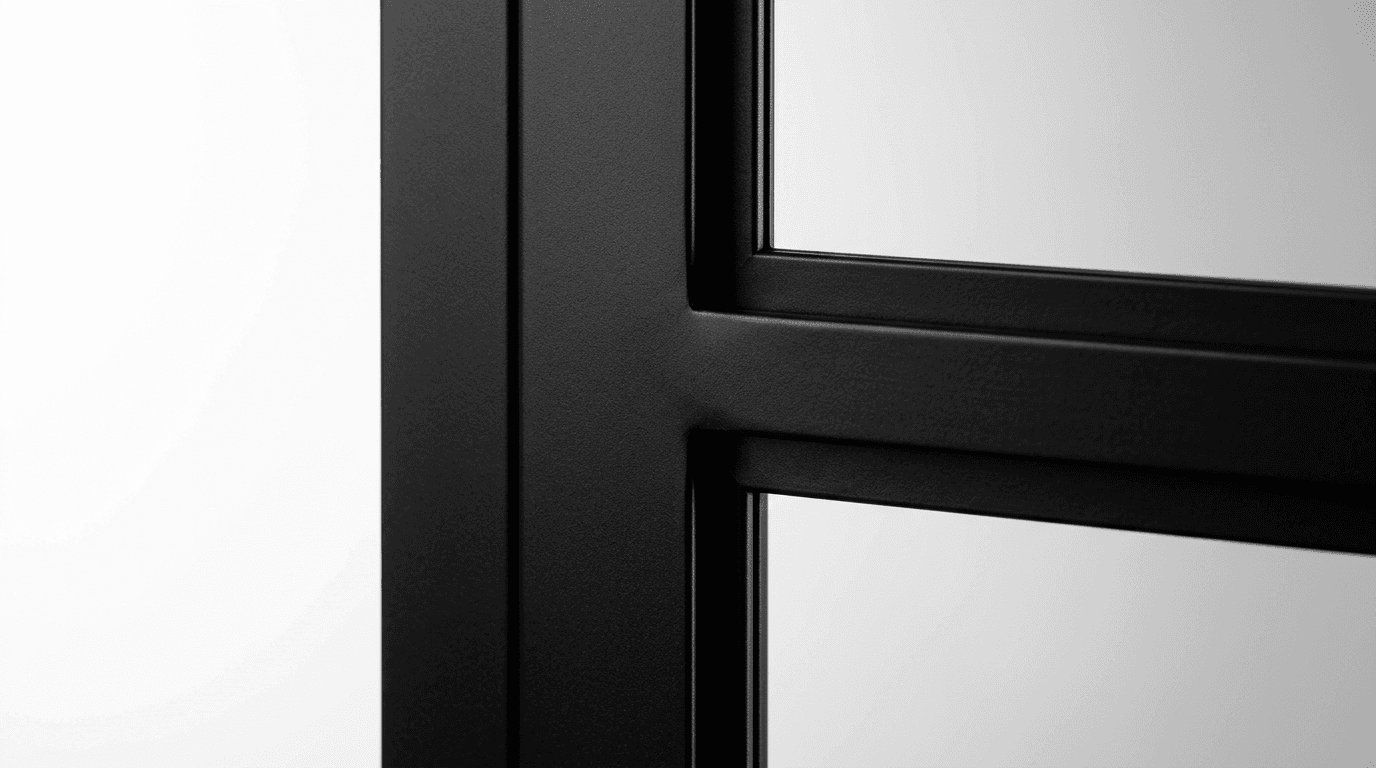
The corner detail
Welded · ground · continuous finish · no visible joint
TDS · Dublin · From €1,767
There is no shelf version
of this product.
Every TDS door is made to measure from the site survey. Every dimension, every detail, is specific to your opening. That is precisely why it looks the way it does once installed.
FAQ
What is the difference between a steel frame door and an aluminium door?
Steel has significantly higher tensile strength than aluminium — roughly three times greater. This allows steel frames to be extruded into genuinely slimline profiles (as narrow as 20mm visible face) while still carrying the structural load of large glass panes. Aluminium profiles must be considerably thicker, and aluminium systems use mechanical connectors at corners that remain visible at frame junctions.
Are steel internal doors better than timber?
Steel and timber serve different design intentions. Timber doors are susceptible to moisture expansion and warping over time, and are inherently limited in the glazed area they can structurally support. Steel frame doors are dimensionally stable regardless of humidity, can carry large glass sections with minimal frame visibility, and are made to measure to the exact opening.
Why do interior architects specify steel doors over aluminium for premium projects?
The specification comes down to detail: the visible frame width, the corner treatment, and the continuity of finish. Steel allows a 20–25mm visible profile with a welded, ground, and painted corner — indistinguishable from a structural steel section. Aluminium cannot achieve this with standard extrusions.
Are TDS internal doors made to measure?
Yes. Every TDS OC Slimline internal door is made to measure. There are no standard sizes. We manufacture to the exact opening dimensions, with your specified glass type, finish (RAL colour), and hardware configuration. Lead time is typically approximately 10 weeks from order confirmation following a site survey.
What is the starting price for a TDS internal steel door?
TDS OC Slimline single doors start from €1,767 for a standard single-leaf configuration. Final pricing depends on door size, glass specification, configuration (single, double, with side panels), and hardware. We provide a fixed price following a site survey and specification review.