Spalling
Spalling is the fragmentation of glass from the rear (protected) surface when struck by a bullet. Fragments can cause serious injury or death to personnel behind the glass. EN 1063 explicitly requires that glazing must be shatterproof and produce no spalls after each strike to pass the test.
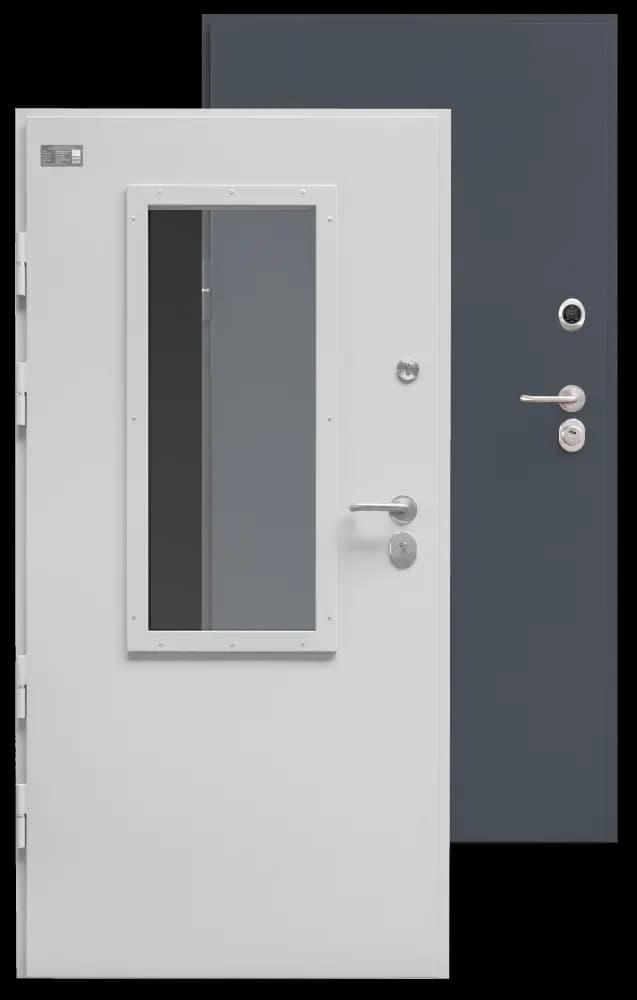
View Our Bullet Proof Doors
FB-rated doors with BR glass meeting the no-spall requirement.
What is Spalling?
When a bullet strikes ballistic glass, the impact can cause glass fragments to break loose from the rear (protected) surface and fly towards occupants. This fragmentation—spalling—poses a significant risk to anyone behind the glass. Even if the bullet does not penetrate, spalling can cause serious injury.
EN 1063 Requirement
EN 1063 requires that glazing must be shatterproof and produce no spalls after each strike to achieve classification. This is a mandatory safety requirement. Glazing that allows spalling cannot be certified under EN 1063 for use in bullet-resistant doors.
No-Spall Solutions
Glass–polycarbonate composite constructions are commonly used to achieve "no spall" products. The polycarbonate layer on the protected side prevents fragments from breaking loose and flying towards occupants. The polycarbonate absorbs and contains the impact energy.
Such constructions can be thinner and lighter than all-glass constructions while still meeting the spalling requirement. The trade-off is that polycarbonate may scratch more easily and require protective coatings.
Safety Requirement
For bullet-resistant doors, the glazing must not allow spalling. This is a mandatory requirement for EN 1063 classification and ensures the safety of occupants on the protected side. When specifying ballistic glazing, always verify that the product meets the no-spall requirement.
For the full EN 1063 classification, see Glass in Bullet-Proof Doors.