Metal Doors: Why Steel Is the Security Standard
In security projects, the term metal doors is commonly used, but the specified product is typically a certified steel doorset. This page explains what matters for performance, compliance, and long-term reliability.
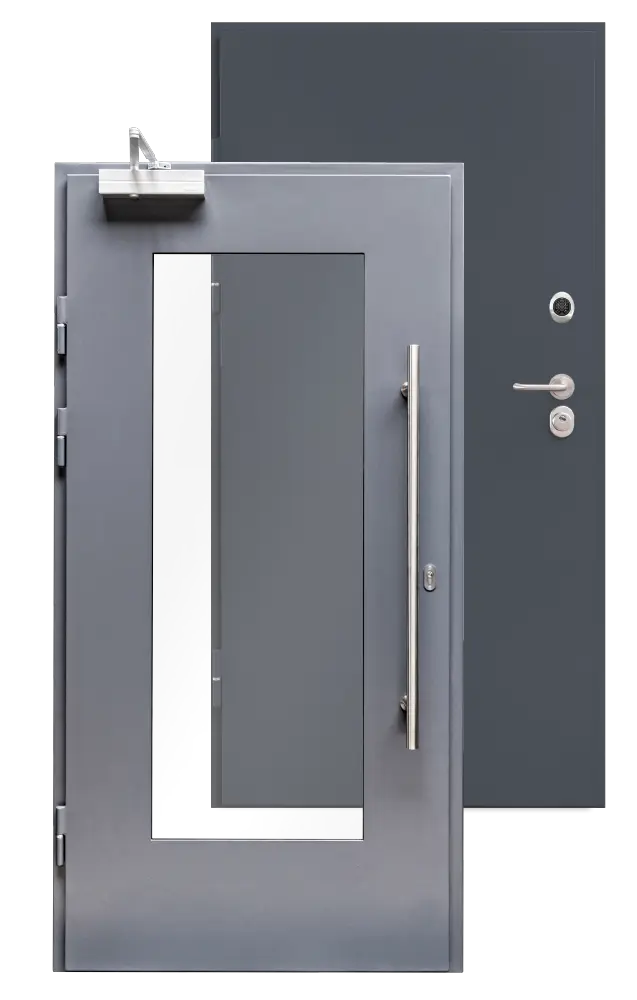
View Our Steel Security Doors
Explore RC-rated, bullet-resistant, and blast-resistant steel door solutions.
Related articles & products
- RC Ratings Explained - which class fits your risk profile
- EN 1627 vs UL Standards - how security testing frameworks differ
- RC Rated Doors - certified steel doorsets for forced-entry resistance
- All Security Doors - RC, FB, blast, and fire-rated options
What "metal doors" means in real projects
Metal doors is a broad category that may include steel, aluminium, or mixed constructions. In technical specifications, however, material type and certification class must be explicit.
Where forced-entry resistance, ballistic protection, blast resistance, or combined fire and security performance is required, specifications usually call for steel security doors with defined EN classifications.
Steel doors are a subset of metal doors
Every steel door is a metal door, but not every metal door is a steel security door. This distinction matters because procurement teams do not buy generic metal: they buy tested assemblies with verified performance.
- Metal doors: umbrella category for different metal-based door systems.
- Steel doors: the standard choice where high structural strength is required.
- RC-rated steel doors: complete tested doorsets under EN 1627.
Steel grades used in security door manufacturing
Professional specification should always define both the security class and the steel grade. The phrase metal doors is not enough for a project schedule or tender package.
- Carbon steel (painted / powder-coated): common for internal and many external security applications where corrosion exposure is moderate.
- Galvanised steel: used where additional corrosion protection is needed before finishing coats are applied.
- Stainless steel 304: suitable for many exterior locations with lower chloride exposure.
- Stainless steel 316 or 316L (SSS 316): preferred for aggressive environments, including coastal projects and areas exposed to salt-laden air.
When to specify SSS 316 for coastal projects
On islands and coastal sites, chloride deposition can rapidly degrade unsuitable materials and finishes. Where doors are exposed to sea air, wind-driven moisture, or direct splash risk, stainless steel security doors in grade 316/316L are typically the safer long-life specification.
In practical project language, this is often requested as SSS 316. The key point is corrosion resistance in addition to security performance. For critical projects, door leaf, frame, visible hardware, and fixings should all be reviewed as a full corrosion system, not as isolated components.
Why steel is typically used for high-security doors
High-security doors require a strong relationship between door leaf, frame, hardware, and anchoring method. Steel allows robust welds, reinforced cores, and high-load hardware integration that are essential in RC-rated and multi-threat assemblies.
Aluminium can perform well in many architectural glazing applications, but for critical forced-entry scenarios, steel remains the dominant specification material.
Choosing the right metal door for security use
The first step is to define threat and usage: burglary resistance class, fire requirement, ballistic level, blast requirement, and access-control strategy. Once these are defined, the door can be specified as a certified steel assembly.
- Residential and light commercial: typically RC2-RC3 steel doorsets.
- Government, data centres, critical infrastructure: often RC4-RC6 and combined ratings.
- Specialist facilities: RC + FB, RC + blast, and RC + fire combinations as required.
- Coastal and marine sites: add explicit material requirement such as stainless steel 316/316L (SSS 316).
Which term should specifiers and buyers use?
For technical documentation, tenders, and compliance, use precise language: steel security doors with required EN classifications and declared steel grade (for example, stainless steel 316 for coastal exposure). This avoids procurement ambiguity and ensures the installed product matches tested performance.
If you are still defining requirements, start with threat profile first (forced entry, ballistic, blast, fire), then choose the appropriate certified steel doorset.
Explore Our Steel Security Doors
See certified solutions for commercial, government, and critical-infrastructure projects.