Panic and Emergency Exit Hardware (EN 179, EN 1125)
Doors on escape routes must allow quick, single-action release from the inside. European standards EN 179 and EN 1125 define the requirements for emergency exit devices. The choice between them depends on whether occupants are familiar with the building (EN 179) or not (EN 1125, typically with a horizontal panic bar).
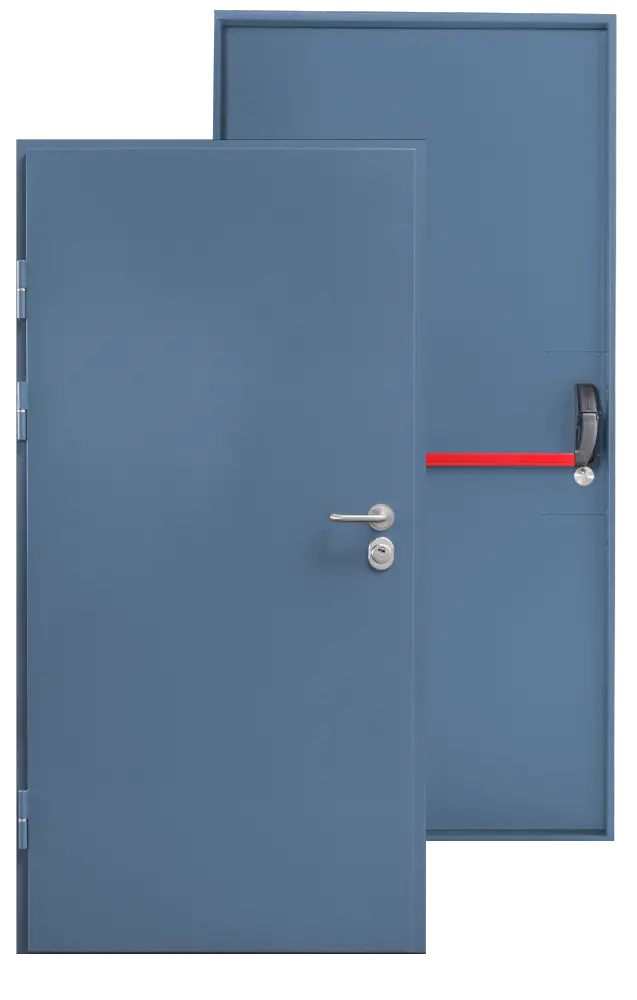
View Our Fire Escape Security Doors
Our fire escape doors are equipped with panic bars or push pads certified to EN 179 or EN 1125.
EN 179 vs EN 1125
EN 179 – Lever or Push Pad
EN 179 applies to emergency exit devices operated by a lever handle or push pad. It is intended for areas where occupants are familiar with the building and know the escape route. Single-action operation releases the lock.
EN 1125 – Horizontal Panic Bar
EN 1125 applies to panic devices operated by a horizontal bar. It is used in public areas where people may not know the layout—e.g. shopping centers, cinemas, stadiums. The horizontal bar is easier to find and operate in low visibility or panic.
Locks Compatible with Panic Hardware
Our RC4 and RC5 doors on evacuation routes can be fitted with locks that support EN 179 or EN 1125 compliant hardware:
- MOTTURA Gorilla – Mechanical panic lock, EN 1125 certified, RC4/RC5
- ABLOY MP520 / MP522 – Motorized lock with handle/panic bar release, RC3–RC5
- ABLOY EL566 / EL568 – Split spindle; inside handle/panic bar provides mechanical exit
- ISEO MULTIBLINDO / FIAM – Multi-point with panic bar, RC3–RC5
Key Requirements
- Single-action release from the inside (no key required)
- Minimum durability (e.g. 200,000 cycles for MOTTURA Gorilla)
- High mechanical strength
- Left and right hand variants for correct installation
For a full compatibility table, see Locks Compatible with TDS Security Doors.
For secure refuge areas and safe rooms, see our panic room solutions.